
Natural stone paint vs Water-in-Sand Coating: Key Differences Explained
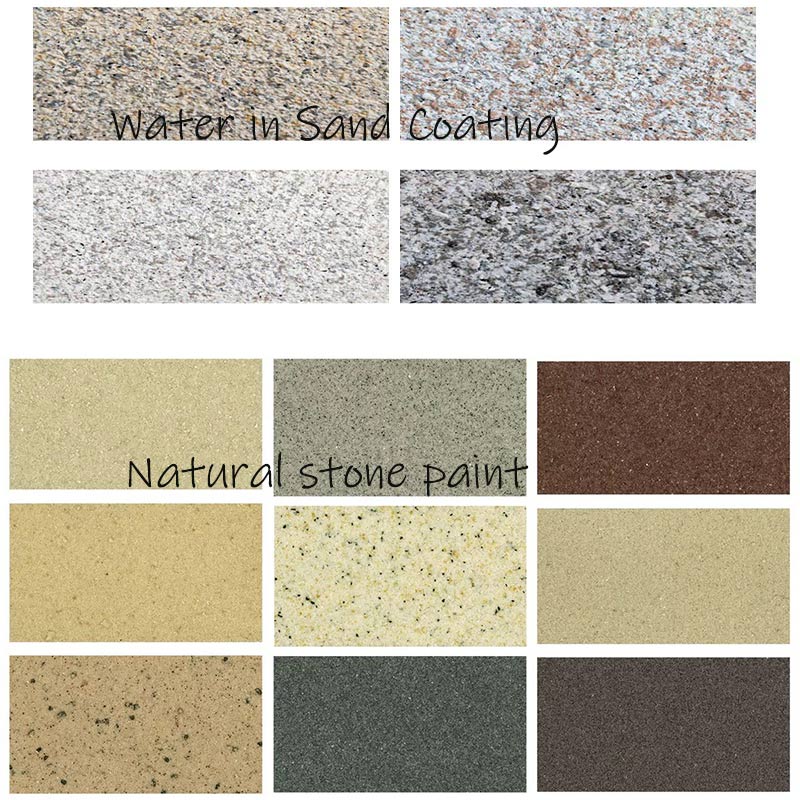
Natural stone paint vs Water-in-Sand Coating: Key Differences Explained
When choosing exterior wall finishes, Natural stone paint and Water-in-Sand Coating are two of the most popular “stone-like coatings.” Both can replicate the texture of natural stone, but they differ significantly in composition, appearance, performance, application, and cost.
Understanding these differences will help you select the most suitable solution for your project and avoid common issues such as fading, cracking, or poor durability.
1. What Is Natural stone paint vs Water-in-Sand Coating?
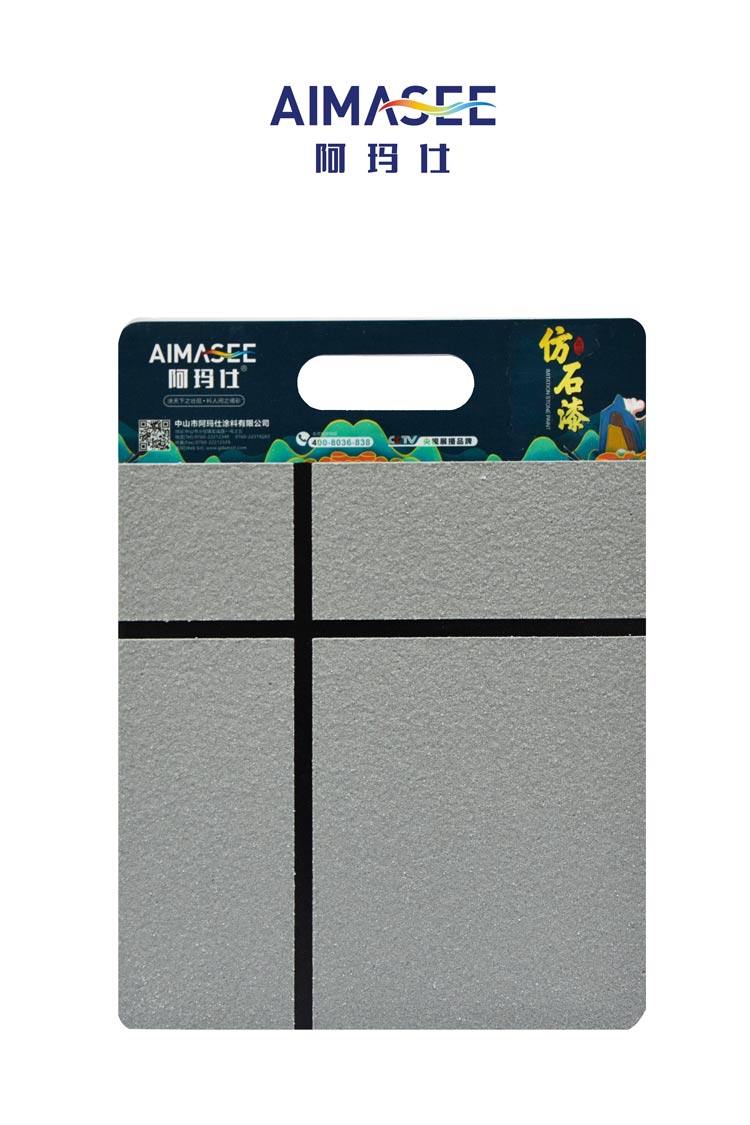
Natural stone paint
Natural stone paint is made from natural colored sand (such as quartz or marble sand), acrylic emulsion, and additives.
It creates a granular, textured surface that resembles granite or stone, making it a cost-effective decorative coating.
Water-in-Sand Coating
Water-in-Sand Coating is an upgraded version of stone-like coatings. It combines:
Natural colored sand
Water-based multi-color particles
High-performance emulsions
This technology allows the coating to achieve richer colors, deeper textures, and a more realistic stone appearance, making it a mid-to-high-end solution.
2. Appearance: Texture vs Realism
Uniform granular texture
Simpler color (usually single-tone)
Medium-level stone imitation
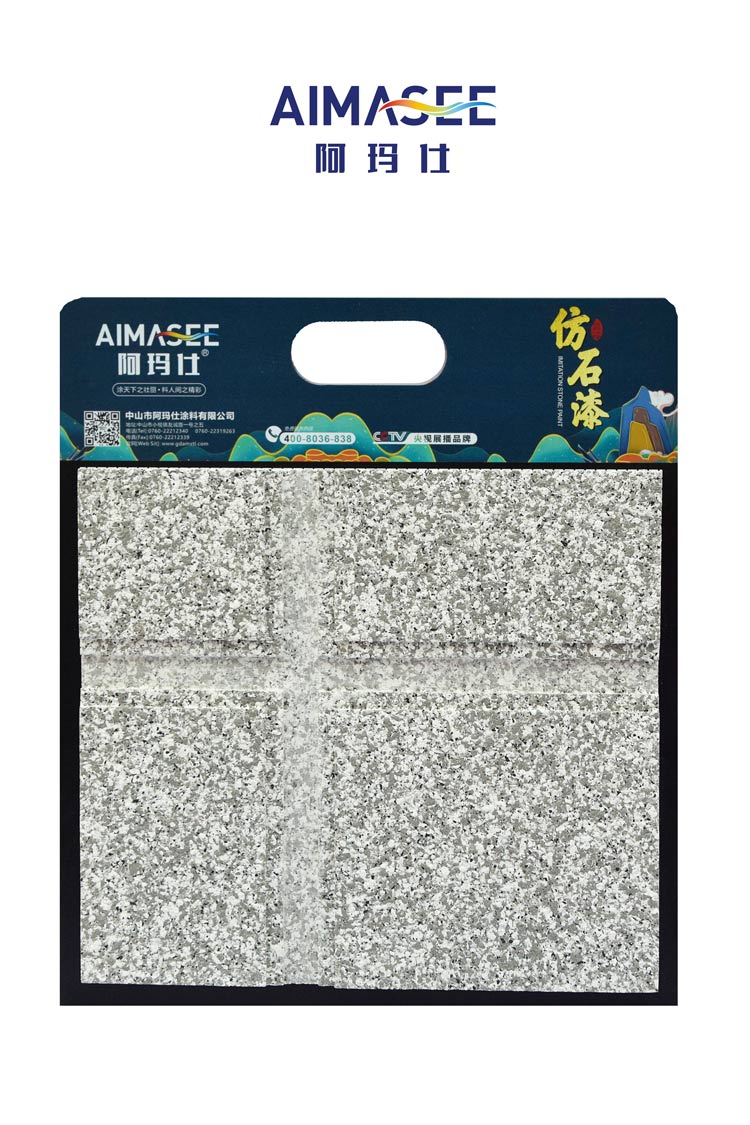
Multi-color, layered texture
Can replicate marble veins and granite patterns
Realistic effect up to 90–98% similarity to natural stone
✅ Water-in-Sand Coating offers a more premium and realistic appearance
3. Performance Comparison
Durability & Weather Resistance
Natural stone paint: Moderate durability; may fade or chalk after 3–8 years depending on quality
Water-in-Sand: Strong resistance to UV, rain, and aging; lifespan up to 10–15+ years
Crack Resistance
Natural stone paint: Thicker coating (2–3 mm), may crack under temperature changes
Water-in-Sand: More flexible; better stress absorption and crack resistance
Dirt Resistance
Natural stone paint: Porous surface; dust and stains can accumulate
Water-in-Sand: Dense surface film; self-cleaning effect with rainwater
✅ Water-in-Sand Coating performs better in durability, anti-cracking, and anti-fouling
4. Application Process
Natural stone paint
Primer + 1–2 spray coats + topcoat
Easier to apply
Faster construction (approx. 2–3 days per 100㎡)
Water-in-Sand Coating
Primer + midcoat + 1-2 spray layers + topcoat
Requires skilled application
Longer process (approx. 4–5 days per 100㎡)
✅ Natural stone paint is easier; Water-in-Sand requires higher technical skills
5. Material Consumption
1-Primer: 0.2 kg/m²(roller or spray)
2-Natural Stone Paint: 3.5 kg/m² (Spray)
3-Finish-coat: 0.2 kg/m² (roller or spray)
(Three steps)
1- Primer: 0.2 kg/m² (roller or spray)
2- Midcoat: 0.2 kg/m² (roller or spray)
3- Imitation stone paint: 1.5 kg/m² (Spray)
4- Finish-coat: 0.2 kg/m² (roller or spray)
(Four steps)
Water-in-Sand uses less material, improving efficiency.
Drying time: 2-4 hours or The next step of construction can be carried out as long as it is dry according to the actual temperature.
6. Cost Comparison
| Category | Natural stone paint | Water-in-Sand Coating |
| Material Cost | Lower | Higher |
| Labor Cost | Lower | Higher |
| Total Cost | Budget-friendly | 1.5–2× higher |
| Long-term Value | Moderate | Higher |
Although Water-in-Sand is more expensive initially, it often offers better long-term value due to durability and lower maintenance.
7. Application Scenarios
Choose Natural stone paint if:
Budget is limited
For residential buildings, factories, or large-scale projects
Simple stone-like effect is sufficient
Choose Water-in-Sand Coating if:
You want a premium, realistic stone finish
For villas, luxury housing, hotels, or commercial buildings
Projects in harsh climates (coastal, high UV, or cold regions)
8. Selection Tips
Budget-focused: Choose high-quality acrylic-based Natural stone paint
High-end projects: Choose water-in-sand coating for better aesthetics and durability
Humid or rainy areas: Water-in-sand is more resistant to dirt and moisture
Cold climates: Choose flexible systems with strong freeze-thaw resistance
9. Important Buying Tips
Avoid extremely low prices (may use low-quality emulsions and pigments)
Always request sample testing:
Check color and texture
Test water resistance (24-hour soaking)
Test abrasion resistance
Conclusion
There is no absolute “better” option between Natural stone paint and Water-in-Sand Coating.
Natural stone paint stands out for its cost-effectiveness and simple application
Water-in-Sand Coating excels in realism, durability, and premium performance
The best choice depends on your budget, project type, and environmental conditions.
Looking for Professional Coating Solutions?
At Aimasee Coatings, we provide both Natural stone paint and Water-in-Sand Coating systems tailored for different projects worldwide.
Contact us for:
Product catalogs
Color cards
Samples
Technical guidance